
5 Christmas Pastries from Italy
Updated: Nov 22, 2025

In the midst of the season of lights and festive tables, Italy is once again a reference for those seeking authentic flavors. The classic Panettone and pandoro share the spotlight with artisanal Turrons, shiny Struffoli and the spicy intensity of Panforte. An irresistible combination for any dessert lover.
Panettone

Panettone is perhaps the most famous Italian Christmas dessert and its history combines legend with Milanese tradition. Its origins can be traced back to the city of Milan in the 15th century, around the court of Ludovico Sforza. According to a popular legend, this sweet bread was created by accident when, during a Christmas banquet, the court chef burned the dessert and a servant named Toni improvised a bread using the ingredients available: eggs, flour, lard, citrus fruits and raisins. The guests were so pleased that it soon became known as “Toni's bread” or “panettone.” However, historians such as Porzio recall that sweet cylindrical breads had already been made in Milan at Christmas since the 15th century and the name “panettone” has been documented since that time.
Pandoro
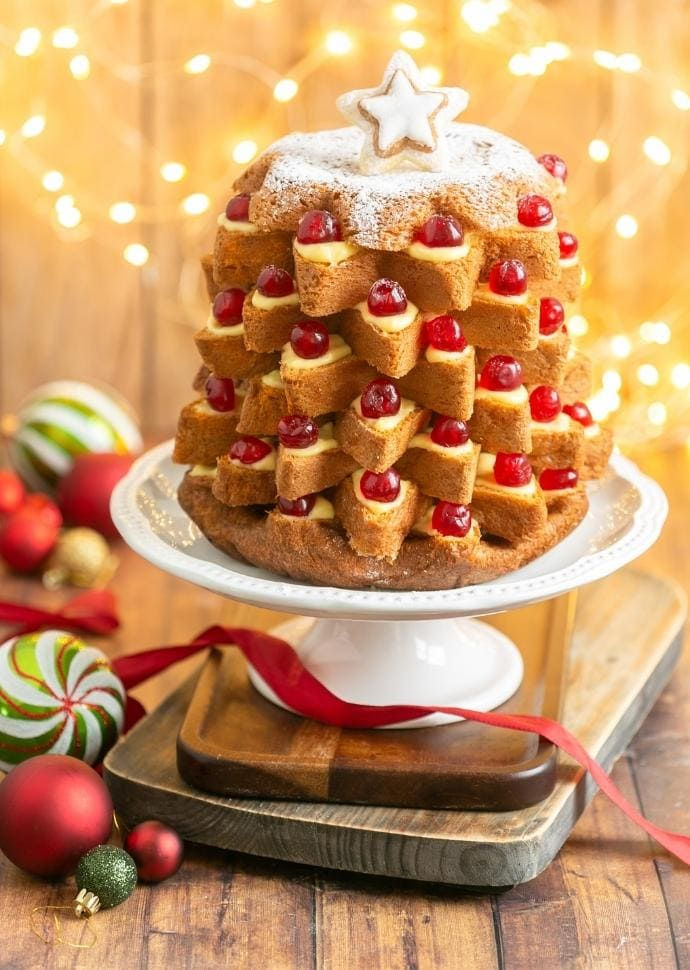
Pandoro is another popular Italian Christmas dessert, originally from Verona and known as “golden bread” due to its yellow color and soft texture. Its current recipe was patented in 1884 by pastry chef Domenico Melegatti, who was inspired by “Levà,” an ancient sweet bread typically prepared on Christmas Eve in Verona. In addition, the characteristic eight-pointed star shape was designed by the Veronese artist Angelo Dall'Oca Bianca, becoming a national symbol of Christmas. Although it was patented in the 19th century, white sweet bread had been a privilege reserved for nobles on certain holidays since the Middle Ages.
Turrones
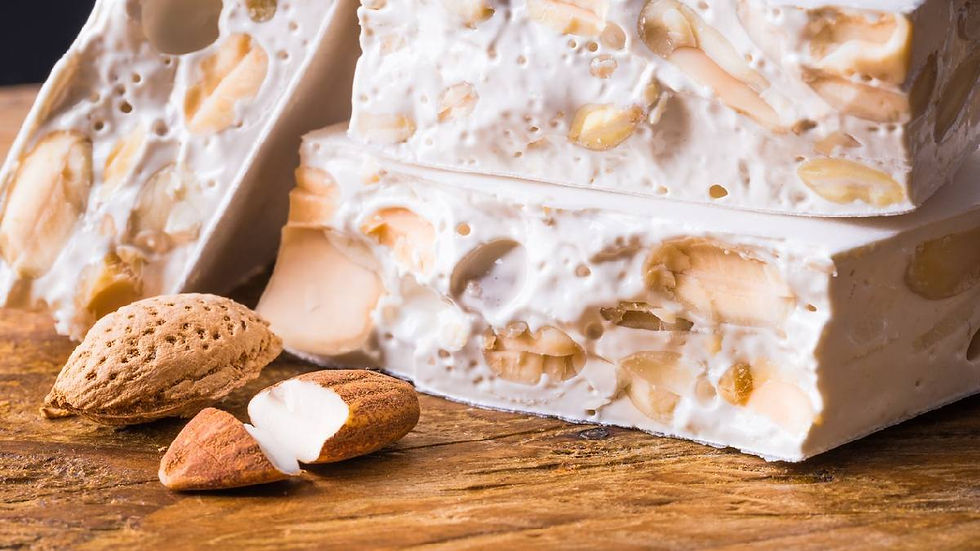
Turrones has ancient and multicultural origins. Its Roman predecessor is believed to have been “cupedia,” a sweet made from honey and nuts. The recipe as we know it today was brought to Italy by the Arabs and spread throughout the Mediterranean from the 11th century onwards. The first documented turrón in Italy was served in Cremona on October 25, 1441, at the wedding of Francesco Sforza and Bianca Maria Visconti where the dessert was shaped like the Torrazzo, the city's bell tower, from which the name “torrone” derives. In the 19th century, confectioners such as Borrillo in San Marco dei Cavoti diversified the recipe with hazelnuts and cocoa, creating contemporary versions of this sweet treat.
Struffoli

Struffoli are small balls of fried dough coated in honey, typical of Naples and with roots dating back to ancient Greek times. It is believed that Greek colonists introduced this recipe to the Gulf of Naples and that the current name comes from the Greek term “strongoulos” (rounded). In Naples, in times past, convents prepared them to give to noble families at Christmas as a token of gratitude for their good deeds. Originally, the dough was made with only flour and water, later enriched with eggs and lard.
Panforte
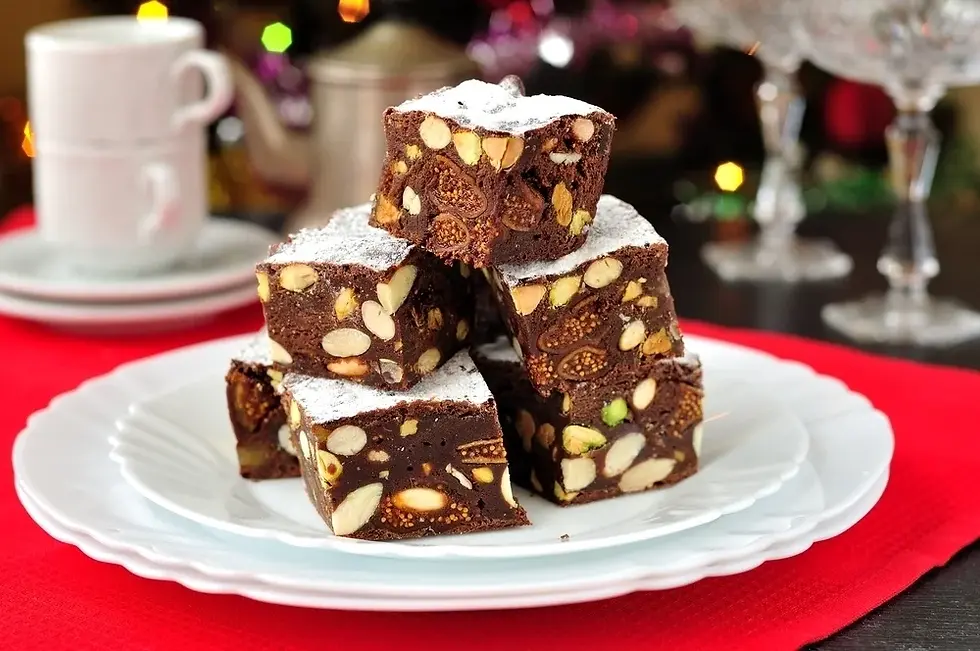
Panforte is typical of Siena, in Tuscany and is one of the oldest Christmas sweets in Italy. Its roots date back to the 13th century, with documents from 1205 mentioning panforte (literally “strong bread”) as payment of taxes or tithes to monasteries. Originally made with honey, pepper, and dried fruit, it evolved over the centuries into a refined festive dessert. In the 19th century, the first panforte factories were established, and the recipe was included in fundamental texts such as Artusi's “Science in the Kitchen and the Art of Eating Well.”



Comments